

Three Small-Caps on the Radar
General advice only — prepared for Wholesale/Sophisticated/Professional Investors. See full disclaimers below.
Small-cap money is always chasing themes. Lithium rebounds that haven’t shown up. AI whatever-nexts that have. Gold fever. Oil fever. You name it.
While the herd chases glory, three quieter ASX businesses have kept compounding. Profitably. With solid margins. Into growth markets.
The share prices haven’t kept up, and for two of them this week’s news explains the state of play. One catalyst is still to land.
So let’s dive in.
Consumer Health · Probiotics
Biome Australia (ASX:BIO) — The Gut Health Compounder
Biome Australia is a probiotics and gut-health business built around the Activated Probiotics range. The most recent half delivered 40% revenue growth to $12.40m, and the margin profile came with it. Gross margins came in at 61.1%, which carried through to NPAT of $1.18m — up 172% on the prior half.
The business is now cash-flow positive. Operating cash inflow of $2.09m in H1 FY26, a $3.21m turnaround on the prior corresponding half.
Biome has moved past the supplement-company label. It’s transitioning from an obscure niche player into a market leader, and creating its own market on the way.
The register story
Individual insiders hold 29.1% of the company. A further 7.6% sits with private companies on the register. Institutions own 1.2%.
Combined, roughly 36.7% of the company is in closely held hands. That’s a register that’s never been properly marketed to the fund managers who rate a 40% grower on a modest forward multiple. If fund managers get their dirty paws on Biome, volatility may increase, given the large portion of the company locked up.
Three-part thesis
The category is waking up.
Gut health has moved from trend to structural. The microbiome research base deepens every year, preventative health is eating into prescription medicine budgets in Australia, the US, and Europe.
Probiotics is now the fastest-growing category in Australian pharmacy. Biome sits at the clinical end of a market otherwise full of house-brand powders with no evidence behind them.
The moat is distribution plus evidence.
Getting a probiotic product onto the shelf at Chemist Warehouse, Priceline, Blooms, Discount Drug Stores and TerryWhite is a multi-year build.
Biome has done it.
H1 FY26 pharmacy scan data confirmed Activated Probiotics as the #1 probiotic brand by revenue in Australian community pharmacy, and #2 overall when Chemist Warehouse is included. It is also the fastest-growing brand in the category.
The clinical-study data is the gate that keeps the next entrant out — because the next entrant can buy shelf-space, but they can’t buy a seven-year clinical track record overnight.
The multiple has compressed while the growth hasn’t.
The stock trades on 10.2x forward P/E. You rarely see a 40%-grower priced like a flat business unless the growth is already rolling over.
Biome’s has not.
The catalyst — Q3 business update still pending
The Q3 FY26 update is the next print, and it should land before the end of April.
The run rate tells you what to look for.
Q1 FY26 delivered $5.95m of revenue. Q2 FY26 came in at $6.45m. That brought 1H FY26 to $12.40m, a 40% lift on 1H FY25. Annualised revenue run rate exiting Q2 was ~$25.8m.
For Q3 to keep the run rate alive, it needs to clear roughly $6.5m. For the narrative to keep compounding, it needs to clear it comfortably.
Three things to watch.
The first is international revenue.
Biome’s offshore footprint runs through Canada, Ireland, the UK, and New Zealand — small today, but growing. The tell is whether international now contributes a material percentage of group revenue. That’s the shift from ‘Australian probiotics specialist’ to ‘global consumer health brand,’ and it would reshape what multiple the market is willing to pay.
The second is pharmacy ranging.
The big read-through is whether Chemist Warehouse has extended ranging across more SKUs. Each new SKU on shelf is a recurring revenue layer that doesn’t show up in headline numbers until the second quarter it exists, because the first is absorbed by launch discounting.
The third is margin trajectory.
Gross margin at 61% is already high for consumer health. Holding or extending it while revenue grows compounds on top of revenue growth for an outsized bottom-line impact. A soft margin print would mean growth is being bought with promotional spend — and the market prices that differently.
Balance sheet check
Cash sits at $3.36m against $1.50m of borrowings, for net cash of ~$1.86m. Borrowings were halved over H1, down from $2.91m at 30 June 2025. Cash receipts from customers grew 62% to $13.35m for the half — outpacing revenue and signalling improved working capital management.
The balance sheet is OK. Not super strong, but solid. And it’s getting better every quarter now that the business is generating cash.
Risks
Three to sit with.
Single-country concentration — Australia still does most of the revenue. Customer concentration across the major pharmacy chains, who hold the pricing power at the shelf. Offshore expansion unproven at scale.
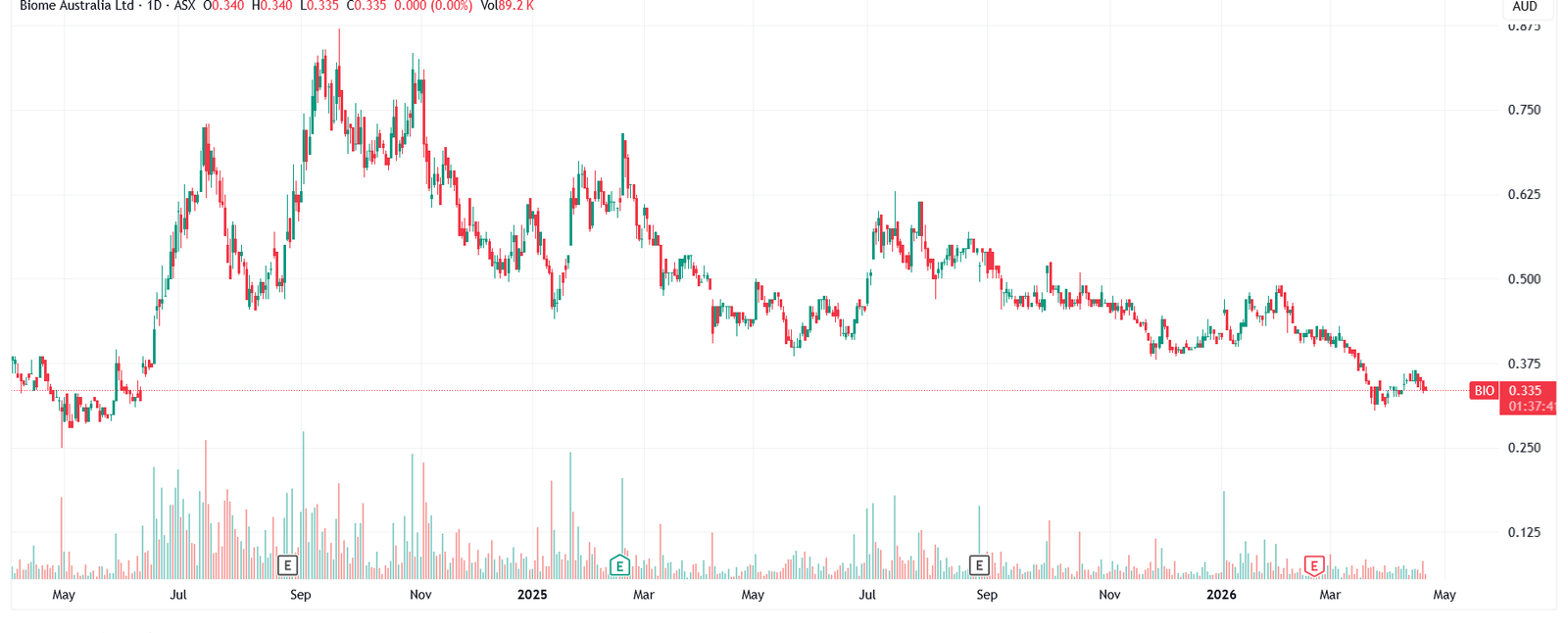
At $76m market cap with a 40% revenue grower on a 10x forward multiple, a 1.2% institutional register, and a lone analyst target at $1.00, BIO’s Q3 print is a key confirmation check that this story could be undervalued.
Medical Devices · Sleep + MEG
Compumedics (ASX:CMP) — The Catalyst Just Fired. Guidance Was Cut. Stock Went Up.
Compumedics is a Melbourne-based medical device company with a thirty-plus-year listed history and three growth legs.
Understanding the three legs is the only way to make sense of what the market did on 21 April.
The first leg is sleep diagnostics.
Compumedics’ Grael amplifiers and ProFusion software sit inside sleep laboratories across the US, Europe, and Australia. It’s the legacy business, the cash engine that has funded everything that followed. Compumedics spun out of sleep research in the late 1980s, and sleep is still the bread-and-butter today.
The second leg is neurodiagnostics.
Think EEG, the machines that map electrical activity in the brain for epilepsy monitoring, intensive care, and sleep labs. CMP’s Neuvo system is a meaningful player in North American hospital procurement, where the replacement cycle is long and the relationships are long-standing.
The third leg, and the reason the stock has re-rated over the last two years, is MEG.
Magnetoencephalography is a brain-imaging technique that picks up the faint magnetic fields produced when neurons fire. Where an MRI gives you a photograph of the brain’s structure, MEG gives you a video of its activity. It’s the most precise non-invasive measurement of brain function that exists.
Only two or three vendors globally can build a clinical-grade system, and CMP is one of them. Their Orion MEG has around A$20m of orders booked, and the first install at Tianjin Normal University validated the platform in a live clinical setting.
There’s also Somfit, a wearable home sleep-test sensor moving diagnostics out of the lab and into the bedroom. That’s the earlier-stage bet, and it’s the one management has prioritised for manufacturing ahead of commercial rollout.
The market has been pricing CMP as a MEG call option with some legacy cash flow attached. The 21 April update rearranged that view.
The update — 21 April
FY26 revenue guidance was cut from approximately $70m to $62–65m.
EBITDA guidance moved from “up to $9m” down to $5.5–7m. At the midpoint, that’s a 10% haircut to revenue and almost 30% off the EBITDA line.
The company blamed four things. Middle East conflict disrupting helium supply and pricing, which feeds directly into MEG system manufacturing. A deliberate decision to prioritise Somfit D production ahead of its commercial rollout. Weaker-than-expected performance from the US capital equipment line. And MEG revenue expected to carry into FY27 rather than be recognised in FY26.
Revenue growth versus FY25 still comes out at +22% to +28% on the new guide. Total liquidity sits at $10–11m, including the undrawn facility.
That’s a material downgrade.
Bad.
The stock rallied 5.3% the next session.
So, good?!
The cut confirmed what the market had already priced in.
The fear had been worse — a capital raise, a cash crunch, a MEG order pulled altogether. Instead, the orders are intact, liquidity is adequate, and the growth rate is still in the mid-20s. The downgrade is a timing issue, not a thesis-killer.
The thesis has shifted
The market was right to treat CMP’s revenue as lumpy, and the update confirms it.
Big MEG orders land quarterly rather than monthly, helium supply sits partly outside management’s control, and US capital equipment moves on hospital budget cycles that don’t care about CMP’s calendar.
None of this is permanent. All of it pushes the re-rate case out into FY27 when the deferred MEG revenue lands.
The balance sheet is tighter than the first read
The $10–11m liquidity figure from the update includes an undrawn facility.
Working cash is thinner once you strip that out. These are manage-carefully numbers, not well-capitalised-for-growth numbers, and the tight balance sheet is the reason the FY27 ramp has to execute.
What didn’t change
MEG is still a global oligopoly of two to three vendors, and CMP is one of them. The Orion order book is still intact at ~$20m, the Tianjin install still validates the platform, and follow-on orders are still flowing.
The sleep tailwind is structural — obesity is rising, populations are ageing, and payers are more willing to fund diagnostic studies than they were a decade ago.
SaaS revenue streams are still expanding on the back of that — H1 FY26 SaaS revenue of $4.6m was up 56% year-on-year. Individual insiders hold 53.8%, and private companies on the register hold a further 10.2%. Institutions sit at 3.0%. Management is heavily aligned with shareholders.
The valuation lens has moved
Forward PE is a distorted lens right now, because the cut compresses the earnings base.
EV/Revenue is the cleaner read at 1.17x. Re-run the forward PE on the revised guide — at a midpoint of $6.25m EBITDA and reasonable depreciation and amortisation, EPS resets to roughly $0.022–0.028. That puts forward PE in the 11–14x range on the new guidance.
A step up from the 8.1x that held before the cut, and a reminder that valuation math doesn’t stand still when guidance moves.
Counter-arguments worth respecting
Revenue is lumpy by structure, not accident.
The company has had false starts on profitability across its listing history. Sleep hardware faces pricing pressure from cheaper Chinese competitors. And the current debt load constrains how aggressively management can fund the FY27 ramp without returning to shareholders.
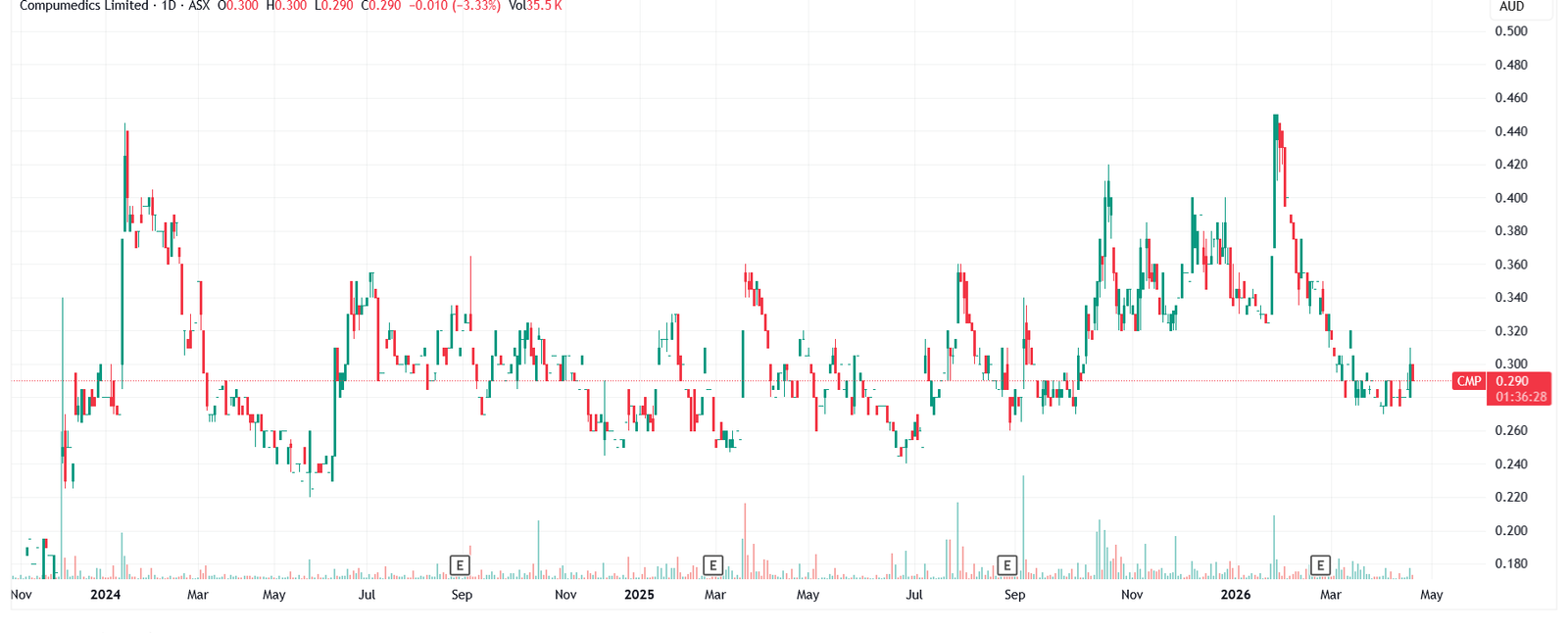
The market rallied on the guidance cut because it was less bad than feared. That might be a bottoming signal. The thesis has reset from near-term re-rate to FY27 patience.
Industrial Safety · Mining BEV
Advanced Braking Technology (ASX:ABV) — Mining Safety’s Quiet Monopoly
Advanced Braking Technology makes the Failsafe spring-applied, hydraulically-released braking system.
If you’ve been in an underground mine in Australia, Chile, Indonesia, South Africa or the US, you’ve probably seen a vehicle fitted with their product. The engineering is elegantly inverted — brakes engage by default, and hydraulic pressure is what releases them. A total hydraulic failure stops the vehicle. It doesn’t run it away.
This is a business built on regulation and OEM inertia.
Mining safety regulators globally are tightening failsafe requirements on underground and surface mining vehicles. Every tier-one OEM — Caterpillar, Komatsu, Sandvik, Epiroc, Volvo — has a version of this specification on its vehicle certification list.
ABV is on those approval lists. Getting added requires years of engineering validation, and the switching cost for an OEM runs all the way to a platform redesign, well beyond the scope of a tender round. That’s a big consideration, and it confers pricing power on ABV.
There’s a second tailwind building underneath the first.
The transition to battery-electric mining vehicles is rewriting brake architecture. Traditional hydraulic systems don’t translate directly.
Regenerative braking handles the workload, but the failsafe requirement remains — and gets more rigorous, because BEV mining vehicles are heavier and the software stack is more complex.
ABV’s patented system has been engineered into several first-generation BEV mining platforms already, which is the leading indicator that the second tailwind is landing.
The register
Individual insiders hold 39.7% of the company. Private companies on the register hold a further 25.7%. Institutions sit at 2.4%. Closely held runs to roughly 65%, which keeps the float tight and the price sensitive to any change in institutional appetite.
The forward multiple is the catch
Forward PE of 18.6x is the highest of the three by a factor of two.
Shares are up 69% over the last twelve months, so the easy part of the move has been done. The valuation is no longer where the opportunity is — it’s in whether the operating story keeps compounding.
The 4C — fired 22 April
ABV dropped its March quarter 4C this morning. Three watch-items going in. Two landed clean. One didn’t.
Headline numbers first.
Product sales came in at $6.0m for Q3, up 28% on the prior corresponding period. Q3 NPBT of $0.37m took year-to-date NPBT to $1.1m — up 60.3% on pcp. Gross margin held at 49.1%, a touch above last year.
Good.
The balance sheet did better.
Cash closed at $4.67m, up 62% on the FY25 year-end balance of $2.88m and up 162% on the prior corresponding quarter. The figure includes a $0.6m R&D tax incentive covering FY24 and FY25, so back out $0.6m of one-off cash and the underlying build is still solid.
Strong.
Now the watch-items.
Retrofit pipeline — hit. Aftermarket revenue (Spares and Consumables) jumped 52% to $3.10m for the quarter, framed by management as a strategic shift toward an aftermarket growth model. The Australian brake refurbishment programme has moved to trial. That’s the recurring revenue lift for the business.
Guidance tone — hit. BRAKEiQ — ABV’s autonomous braking product designed for Collision Avoidance System integration — is on track to finalise UOP accreditation this quarter, paving the way for customer adoption in key markets by FY27. That’s the FY27 language we were watching for, tied this time to a specific product line rather than vague commentary.
OEM order flow — partial. A domestic mandate landed at the MMG Dugald River underground zinc mine in Queensland, and international engagements were called out in North America and South Africa. But no explicit BEV platform signoff from Sandvik, Epiroc, or Caterpillar. The second tailwind is still in engineering, not yet showing up as contracted revenue.
Management also flagged the Middle East conflict as a supply-chain risk — the same theme CMP disclosed 48 hours earlier. Shipping disruptions are now affecting global vehicle supply, which could pressure OEM capex decisions through FY27.
The stock ticked up 3.8% on the day, closing at $0.135. A muted response to a clean print.
The 4C confirmed the operating story.
Counter-arguments
Mining capex is cyclical, and a commodity downturn would hit new vehicle orders and therefore retrofit demand. The Failsafe IP is strong, but large OEMs can design around most patents given enough time and enough money. And Q3 NPBT came in only +1% pcp despite the strong topline — management flagged timing of strategic hires as the cause, but execution lag is worth monitoring.
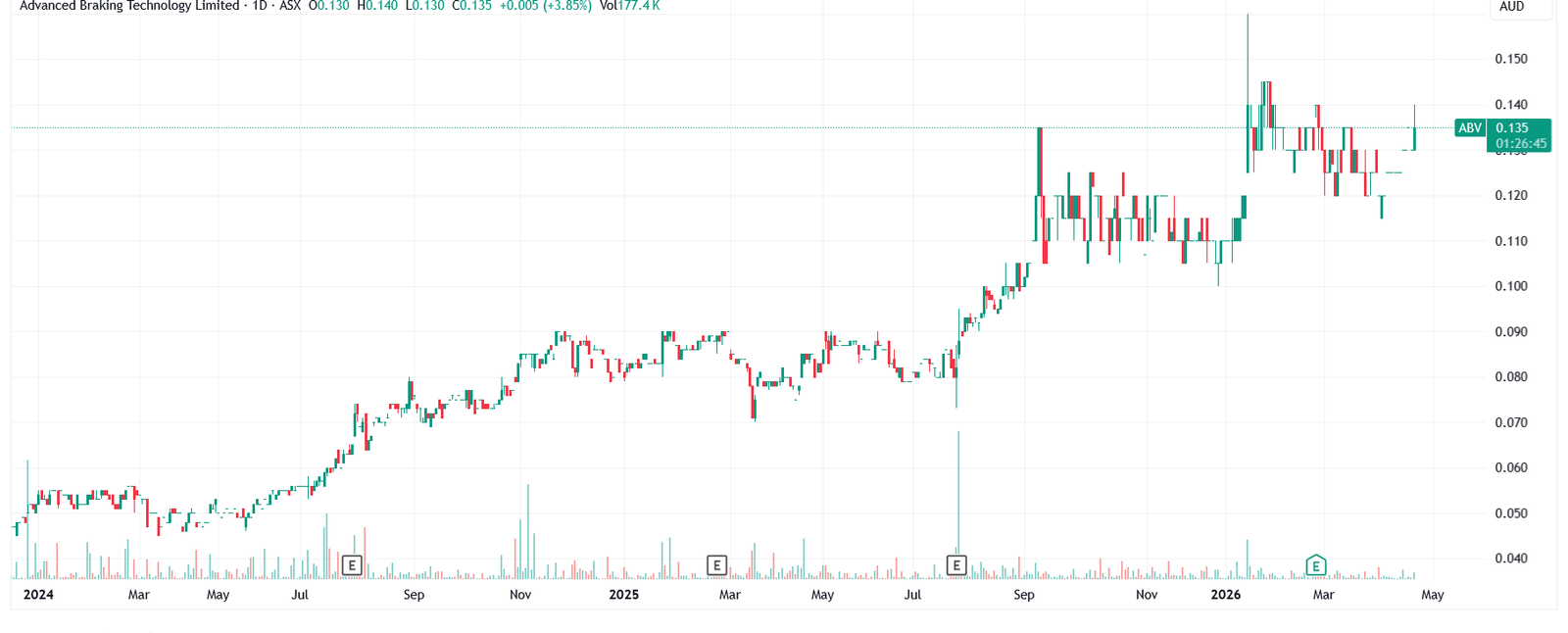
Retrofit surged, FY27 tone arrived, cash doubled — and the stock barely moved. The market is already pricing the clean operating story. The re-rate trigger is the BEV platform signoff, still yet to land.
The Scorecard
Growth. Margin. Balance sheet. Valuation. Catalyst clarity. Register tightness. One table.
The Edge
Thematic trades can be highly rewarding. When hype catches on, prices can move quickly and to places that make no sense.
Classic tech bubble type stuff.
There are plenty of big thematic tailwinds to position for. Such as AI, EVs, Renewables, drone warfare, inflation etc. The list goes on.
The risk with big thematic trades that every other small-cap investor is chasing is overpaying. The reversals are brutal and frequent.
The three we’ve got today are slow burners largely flying under the radar. They don’t catch as much attention as AI stocks, but the fundamentals and valuations are hard to ignore.
These aren’t recommendations. They are ideas for your watchlist.
Until next time, happy investing.
Izaac Ronay
Check out Explosive Growth for leading stock market research and The Week’s Edge for our ongoing take on the markets and investing.
Izaac is a broker and trader with Vitti Capital. He brings over 10 years of trading experience with top-tier global trading houses and 20 years of experience analysing and investing in ASX listed equities.
This publication has been prepared by The Markets IQ, a division of Vitti Capital Pty Ltd (ABN 13 670 030 145), which is a Corporate Authorised Representative (001306367) of Point Capital Group Pty Ltd (ABN 41 625 931 900), the holder of Australian Financial Services Licence 518031. This report is for general information only and does not take into account your objectives, financial situation, or needs. It is not personal financial advice or a recommendation to buy, hold, or sell any security. You should consider whether the information is appropriate in light of your circumstances and obtain professional advice before making any investment decision. This report is intended solely for wholesale, sophisticated, or professional investors within the meaning of the Corporations Act 2001 (Cth).
Any views, probabilities, valuations, technical levels, or forecasts expressed are strictly the opinions of the authors as at the date of publication, based on publicly available information and assumptions which may change without notice. They are illustrative only and not predictive of future outcomes. Past performance is not a reliable indicator of future performance.
Directors, staff, or clients of Vitti Capital may hold positions in the companies mentioned or related securities at the time of publication. Such holdings may change without notice. Vitti Capital applies internal controls to manage potential conflicts of interest; however, readers should assume that conflicts may exist.
The analyst(s) responsible for preparing this research note certify that the views expressed in this report accurately reflect their personal views about the companies mentioned and their securities. No part of their compensation is, or will be, directly or indirectly related to the specific recommendations or views expressed herein. The analyst(s) and/or their associates may hold an interest in the companies mentioned.